
Advice, perspectives and stories from the people protecting businesses and communities across South Wales.

From the first risk assessment to the people on the ground, discover what makes a security plan work.
24 September 2026 · 6 min read

Advice, perspectives and stories from the people protecting businesses and communities across South Wales.
From the first risk assessment to the people on the ground, discover what makes a security plan work.
24 September 2026 · 6 min read
From the first risk assessment to the people on the ground, discover what makes a security plan work.

How do you know if your security is actually protecting your assets? How do you know if you are completely protected from a security breach?
The short answer is you don’t.
Many companies only find out that they had a weakness in their security in the first place because they had a breach in their security. Put simply, this means that their security failed, a failure that cost them a lot of time, energy, and money to rectify.
When it comes to basic security, it is just a case of ticking boxes. While this may satisfy some people and put their mind at ease in the short term, this leaves companies highly vulnerable to attack as they have holes in their security that they are not aware of.
Protect your assets
A complete and effective security strategy should make security compliance more than just a box-ticking exercise.
Not only should it be used to ensure that you have all the necessary security measures in place, but it should be used throughout the whole year every year to be certain that your security is always protecting your business.
Think about it. Putting security measures in place isn’t enough when so many things change from day-to-day. When you are not periodically checking that your security is in fact, doing what it should, this is where holes can emerge undetected potentially resulting in a breach that causes irreparable damage.

Is your site as secure as it can be?
With what we said in mind, do you know if your site is as secure as possible? How certain are you that it will protect your assets?
To check if your security is doing what it should, here is a quick security weakness checklist using the 3 Ds of defence:
1. Deter
- Are your CCTV/alarms visible and covering your vulnerable areas?
- Is your perimeter fencing in good condition?
- Is your perimeter free from external obstacles that obstruct visibility or can be used to gain access to your site?
- Is your stock hidden from external view?
- Does your Security Officer hold a valid SIA license and an Approved Contractor Status via the SIA?
- Does your Security Officer dress appropriately (e.g. clearly marked as security)?

2. Detect
- Are your cameras/alarms linked up to an Alarm Receiving Centre?
- Do you have adequate flood lighting and motion sensors on site?
- Do you have an I.T. specialist on board to assist with cyber security threats?
- Do you have methods in place to detect internal theft (e.g. random spot checks)?
- Do you have a trained Security Officer dedicated to detecting security inconsistencies?
3. Delay
- Do you have access control to delay entry?
- Do you have an up-to-date key holder list?
- Do you have a rota for management to walk around and check the perimeter?
- Are your passwords changed regularly?
- Do you have a strategy in place to deal with a disgruntled employee/supplier?
- Do you have a Security Officer on site who can intervene and alert a security breach?
Be 100% sure that your security is doing what it should
Should a security breach occur, the effects can be extremely damaging so don’t wait for this to happen. Protect your assets and the future of your business by checking your security weaknesses now.
To check your security weaknesses yourself, download our handy security weakness checklist! If you can’t tick every box then please get in touch!
What we can do for you:
RGM Security offers a wide range of security services including a free consultation where we carry out a weakness assessment of your site. If you need threat awareness training for your staff, intrusion testing to check your defences or even just advice, please don’t hesitate to contact us!
Need more help or advice with your business’s security? Check out our other useful articles:


While most workplaces are generally safe environments, it’s important to be aware of (and prepared) for the worst. For a complete and comprehensive security programme, you should be training your employees on threat awareness and enforcing prevention tactics. Here are the areas that you should be covering.
The 3 areas of security threat awareness (and how to prevent them)
Although every company, employer, and workplace can face their own unique security threats, generally, these threats can be grouped into three categories. These are personnel security, physical security, and digital security.
1. Personnel Security
Threat:
What many companies don’t account for in their security strategy is staff sabotage. This is crazy when you think about it as employees are the people that know your business best. If you as an employer are lax about your personnel security (e.g. issuing everyone with an access badge or key for multiple facility areas), then you are at risk of your employees taking advantage.

Prevention:
Common ways to control for personnel security include:
- Providing staff threat awareness training.
- Safeguarding entrances to the facility (e.g. locks, keycards, alarm systems, security guards).
- Installing CCTV.
- Designating safeguarded entrances into the facility.
- Issuing employee identification cards and access keys to only the personnel that need them.
- Prohibiting visitors from entering restricted areas of the facility.
Read: Why You Need to Include Staff Sabotage in Your Security Strategy
2. Physical Security
Threat:
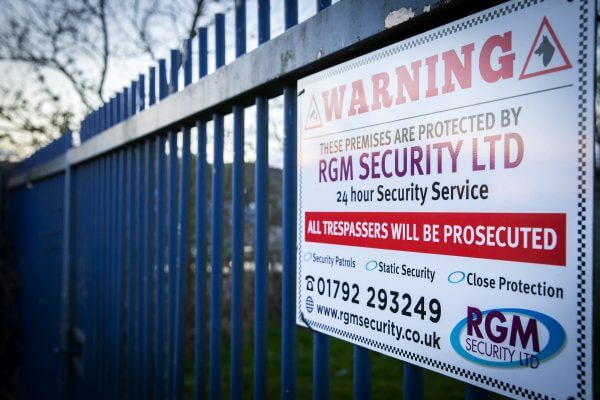
Both employees and opportunistic criminals are a threat to any business so physical barriers are needed to deter, detect, and delay any breach of security. Physical security considerations take into account the security of the company grounds, all facilities and assets, and the property itself. If you have a solid security strategy, your personnel security measures should overlap with most of your physical security measures too.
Prevention:
Common ways to address physical security include:
- Implementing all the necessary security measures for deterring, detecting, and delaying crime (including for example manned guarding provisions)
- Securing valuables in lockers or other storage areas.
- Securing filing cabinets, supply closets, and stock rooms with locks.
- Implementing policies for reporting any suspicious packages or any missing or damaged company property to facility security.
- Disposing of shredded documents and recycling bins securely.
Read:
The 5 D’s of Perimeter Security: the Ultimate Guide
Intrusion Testing: What is it and will my business benefit?
Why You Should be Intrusion Testing and How Often
3. Digital Security
Threat:
Whether a company handles sensitive data or not, a hacking or phishing attack can have devastating consequences for any business. If you have a computer, criminals can hack into HR software, obtain employees’ personal information, obtain passwords to access company accounts and much more. The damage to a business when it comes to a digital attack can be irreparable yet it is one of the areas that a lot of companies do not protect themselves against.

Prevention:
Common ways to control digital security include:
- Providing digital threat awareness training to staff (e.g. never insert suspicious or unknown storage devices into your computer, never click suspicious links or open unfamiliar emails/attachments, the importance of password security etc).
- Regularly making and updating strong, unique passwords that are never reused.
- Regularly updating computers and shutting them down at the end of the day to prevent remote access.
- Implementing secure storage of sensitive data (never on shared drives).
- Completely erasing storage devices before disposing of them securely.
Read:
How to Deter Hackers and Protect Your Data
4 Ways to Prevent a Cyber Attack on Your Business
Always remember the 3 Ds of defence
When it comes to implementing a complete security threat awareness and prevention strategy, you need to always consider the 3 Ds of defence.
Whatever threat you identify, make sure you have the necessary security measures in place to:
- Deter the threat – CCTV, motion sensors, gate access etc deter or discourage a potential threat from occurring in the first place by suggesting that a successful attack is unlikely due to strong defences.
- Detect the threat – cameras, sensors and alarm systems allow you to detect a threat, monitor it, and respond to it efficiently and effectively.
- Delay the threat – interior and exterior barriers ensure enough time for an appropriate response to be triggered and deployed so that the threat can be defused.
When you have the 3 Ds covered in each of your security measures, you can’t go far wrong.

Prevention = protection
The most effective security measures are ones that prevent an attack from occurring in the first place so when you create your security strategy, make sure that threat awareness and prevention measures are a priority.
To protect your business from personnel, physical and digital security threats, make sure to train all employees on the possible security threats and the specific policies that they should use to counteract these threats. When you combine this with the physical security measures that you have in place, you can be sure that your business and assets are secure.
What we can do for you:
RGM Security offers a wide range of security services including a free consultation where we carry out a weakness assessment of your site. If you need threat awareness training for your staff, intrusion testing to check your defences or even just advice, please don’t hesitate to contact us!
To check your security weaknesses yourself, download our handy security weakness checklist!

Need more help or advice with your business’s security? Check out our other useful articles:

Visible threats to your business are easily prevented and managed but hidden threats? Not so much. While a typical security strategy will cover most areas of your business that need protecting, often, it is only the obvious threats that are well known that are the ones that are covered. To completely protect your business against every potential danger, here are the hidden threats to your business you need to know about.
8 hidden threats to your business security
- Your employees – we’ve written a couple of articles on staff sabotage and why you need to include it in your security strategy. If you don’t have productive, skilled, and trustworthy employees, they can pose a significant threat to your business.
- Time efficiency – believe it or not, time efficiency can be a threat to your security. Put simply, when time is managed poorly, mistakes are made and easier, less important tasks get prioritised.
- Outsourcing your tasks – when you outsource tasks, you become responsible for what they do too. Check what security procedures they have in place so that there are no hidden threats to your business too.
- Not having established procedures – if there’s a problem or an issue that has been identified, your employees need to know what the procedure is and who they need to report this too. If they don’t, they may not report it and this can quickly become a much bigger threat.
- Money management – you get what you pay for so if you haven’t allocated enough budget to your security, you won’t be protected sufficiently. Inadequate security can lead to other hidden issues and potentially a breach of your defences which could cost so much more.
- Data issues – have you backed up your data securely? A hidden threat that many companies don’t prepare for is if their computers and operating systems go down. Loss of data could cause irreparable damage to any business.
- Legal slip-ups – for a security strategy to be completely effective, it needs to overlap with other compliance areas such as HR and Health and Safety etc.
- Not thinking about the future – many companies make investments in their security without planning for the future. What happens then is that they grow fast and certain areas aren’t protected.
Protect yourself from every threat
A solid security strategy will protect almost every aspect of your business, but not quite. In order to protect against every potential threat make sure to periodically check and stay on top of these 8 hidden threats to your business.
To check your security weaknesses yourself, download our handy security weakness checklist! If you can’t tick every box then please get in touch!
What we can do for you:
RGM Security offers a wide range of security services including a free consultation where we carry out a weakness assessment of your site. If you need threat awareness training for your staff, intrusion testing to check your defences or even just advice, please don’t hesitate to contact us!

Need more help or advice with your security? Check out our other useful articles:
- Is Your Security Protecting Your Assets or Just Ticking the Boxes?
- How to Deter Hackers and Protect Your Data
- 10 Items that Can Compromise Your Business If Hacked
- Security 101: 5 Security Measures Every Business Needs

When it comes to thinking about our security strategy, we always think about what measures we need to put in place to keep criminals out; what barriers or systems will prevent them from gaining entry to our business or hacking our database. A lot of the time, it never crosses our minds to even look at our own employees. While sabotage by employees generally doesn’t happen as often as other crimes, the impact on business can be much, much greater. Here are 4 reasons why you need to include staff sabotage in your security strategy.
1. Staff sabotage prevents business growth
Unhappy, dissatisfied or disgruntled employees can seriously affect the productivity of a company. From taking too many breaks and impeding team progress to sabotaging careers, damaging equipment, stealing stock, and deleting key databases and programmes, if certain acts go unnoticed, they can cause devastating consequences. An example of where employee sabotage seriously affected operations was a case in Tesla. Here, an employee made coding changes to Tesla’s manufacturing operating system and sent company data to third parties without authorisation.
Read: Do You Consider Staff Sabotage When Thinking About Your Security?
2. Staff sabotage can result in severe financial losses
Any type of sabotage causes money whether it’s a drop in productivity, stock going missing or operations being halted due to technical issues. Sometimes, however, it can lead to loss of clients or extensive costs in damages that such a drop in profit could cause a business to go bust. Many businesses tend to have the biggest financial losses when it comes to employees deleting company programmes or data. One of the biggest cases of this was seen in Omega Engineering Corp in 1996, where a newly-fired I.T employee set up a ‘digital bomb’ and it ended up costing the company $10 million in sales and contracts.

3. Staff sabotage can cause irreparable damage to your reputation
It’s so easy to access information today, not to mention that social media is dominating most people’s lives, so when it comes to disgruntled employees wanting to badmouth their business or bring it into disrepute, it has never been so easy. Just a few negative posts online or even just a single video can quickly turn viral and depending on the content, that can have a very serious impact on a business’s reputation. There has been many a case where this has happened from videos being released of employees misbehaving to the blog which led to a high profile investigation into sexual harassment at Uber. Once a brand is damaged, it can be very difficult to recover from.
4. Staff sabotage can result in you losing your competitive edge or market share
Many employees are unhappy with their jobs, so if they are being headhunted by a competitor that interests them, there’s no telling whether they would just leave or if they would become a spy for them, gathering information for their new company’s benefit. This is not as uncommon as you might think. A Symantec study in 2013 showed that 50% of employees who left or lost their jobs that year alone kept confidential corporate data, 40% of which planned to use it in their new job. Some employees have even taken it a step further releasing confidential information into the public domain. As Morrison’s Supermarkets found out, this not only results in negative press and a drop in shares, but it also leads to a lengthy and costly litigation.
Don’t overlook your staff when it comes to security
Many employers don’t believe that their employees would steal or intentionally seek out to ruin their business, but just like all your other security strategies, it’s about putting measures in place just in case it does occur. It’s like insurance, you cover all of your bases now so that you’re not left to pick up the pieces later.
It’s essential to remember that like a theft or cyber hack, staff sabotage is always deliberate and premeditated. The only difference is that your employees know you, they know your business and how everything works.
Who do you think is likely to be more successful?
Need to test your business’s defences?
RGM Security offers a wide range of security services as well as intrusion testing to check your defences and threat awareness training for your staff. If you need training or just advice, please don’t hesitate to contact us!
Need more help or advice with your security? Check out our other useful articles:

Sabotage. The very word conjures up scenes of villains sabotaging superheroes, but it is more real and more prevalent in everyday life than we realise. In fact, it could be costing your business big time. When you’re thinking about your security, do you take into account your staff as a potential threat?
What is staff sabotage?
Staff sabotage is when angry, bitter, envious or resentful employees take out their aggressions on their employers. Deliberate acts of sabotage are usually carried out to disrupt operations or to slander the company costing the employer time, money, and sometimes leaving them with an irreparable reputation.
Examples of sabotage include:
- Impeding co-workers careers
- Deliberate non-performance
- Resisting change
- Vandalism and pranks
- Destruction of equipment
- Tampering with consumer products
- Deleting customer databases/confidential data
- Giving confidential data to third parties/competitors
- Stealing stock
- Financial fraud
You may be thinking that your employees wouldn’t do this to you, that you have a great work and team culture at your firm but sometimes that doesn’t make a difference.
Yes, many acts of sabotage are carried out because employees feel overlooked for a promotion and want to level the playing field, but many are also carried out because staff are bored, they are unsatisfied with their job, they have other unresolved grievances or they simply just find it exciting.
Staff sabotage is a real problem
It is difficult to know exactly how often workplace sabotage actually occurs as such acts often fly under the radar, unreported and unpunished. What is known, however, is the sheer number of staff that are already unhappy.
In a study by Gallup into the State of the Global Workplace, research showed that a whopping 87% of workers worldwide and 83% in the U.K. are either not engaged or actively disengaged. That means that only 27% of U.K. workers are driving their organizations forward.
With this number of unsatisfied staff, it won’t take much to ignite feelings of injustice or for them to become disgruntled, whether over something that is real or perceived, so the only way that you can completely protect your business is to prepare for these potential acts of sabotage rather than trying to piece your business back together later.
Find out Why You Need to Include Staff Sabotage in Your Security Strategy!
Sabotage is costing businesses all around the world
Staff sabotage can happen in any company, regardless of size. In fact, it’s a real problem for many big-name organisations such as Forbes, Tesla, and the City of New York just to name a few. To give you an idea of the scope of the issue, here are a few facts and figures:
- Symantec Study (2013) – half of employers who left or lost their jobs that year kept confidential corporate date. 40% of these people planned to use it in their new job.
- The American Society for Industrial Security – their Intellectual Property Loss Special Report looked at computer crimes and found that the biggest security concern for 89% of respondents was retaliation from disgruntled employees.
- CSI/FBI Computer Crime Study – approximately 50% of the respondents acknowledged that computer break-ins results in financial loses. One-third of the respondents reported a financial loss of $123 million. Theft of confidential information and financial fraud were among the most serious losses.
- The National Safe Workplace Institute – calculates that a single episode of serious employee sabotage can cost employers $250,000 or more in lost work time and legal expenses.
- Overall in the United States – the losses from employee fraud and abuse cost more than $400 billion annually, costing organizations 6% of their annual revenue.

Don’t underestimate staff sabotage
Security experts have been warning companies for years that the greatest threat isn’t always an attack from the outside, it’s from the people who are familiar with the systems and workings of your company. So start thinking about staff sabotage when implementing your security measures.
Acts of sabotage can happen when you least expect it and they are something that you cannot afford to ignore.
Need to test your business’s defences?
RGM Security offers a wide range of security services as well as intrusion testing to check your defences and threat awareness training for your staff. If you need training or just advice, please don’t hesitate to contact us!
Need more help or advice with your security? Check out our other useful articles:

When we say ‘compromise,’ we are talking about things that can make your business vulnerable to crime. We’ve all heard the stories of businesses being hacked and cybercrime is continuing to be more of a problem every day, especially with the rate that technology is developing, but not everyone takes is at seriously as they should. To help you combat cybercrime, here are 10 common items that can compromise your business.
Know what gadgets can make you vulnerable
Many people believe that their business can’t be hacked or that it won’t happen to them or worse, they’ve heard the stories and they know it can happen but they don’t take it seriously enough!
The consequences of a cybersecurity breach can be dire, resulting in a significant monetary loss, loss of clients, and even the whole business going under, so being aware of your security vulnerabilities is essential to improve your security and prevent cyber attacks.

Here are 10 gadgets that can be hacked to gain access to confidential information:
- Computers
- Smart Phones
- iPads
- WI-FI Routers
- Security Cameras
- Printers & Scanners
- Digital Cameras
- Thermostats & Electric Metres
- Smart/Self-driving Cars
- Digital Access Controlled Gates/Doors
Don’t be lazy and protect your business!
One thing all these gadgets have in common is that they are ‘smart’ – meaning that they connect to WI-FI to allow you to connect devices to transfer information easily.
An un-secure WI-FI connection or weak password is all it takes for a hacker to hack a device and gain complete control of a network. Imagine someone hacked into your printer. Not only can they see any of the most recent files that you have scanned, but if this device is visible to your WI-FI box or connected to your computer, they can then gain access to all devices to take sensitive information, steal credit card information, and even spread a virus that renders all of your equipment useless.
That’s crazy, right?
What’s even crazier is that all it takes to prevent this from happening is using strong passwords and changing them regularly, not opening unknown email attachments and files, and making your devices visible to your WI-FI network only.
It only takes these 3 measures to protect yourself from the vast majority of cyber-attacks, so don’t be lazy, take this issue seriously and protect your business from potentially irretrievable consequences.
What we can do for you:
RGM Security offers a wide range of security services as well as penetration testing to check your defences and threat awareness training for your staff. If you need training or just advice, please don’t hesitate to contact us!
Need more help or advice with your security? Check out our other useful articles:

Whether you need a single static guard, a full mobile patrol schedule, or a bespoke security package across multiple sites, we're ready to talk it through. Get in touch today to discuss your security requirements.