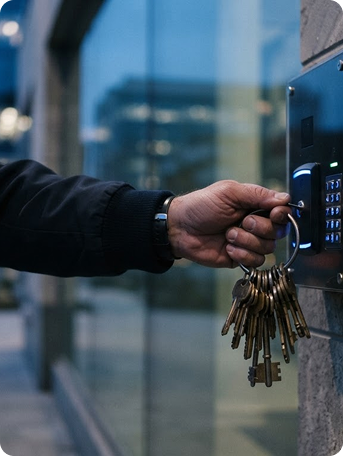

Every premises has its own routines and pressure points. A warehouse, an office and a construction site do not need identical plans. What they do need is a considered approach that connects prevention, people and response. Here are five foundations to help you assess whether your arrangements work in practice.
Before deciding on a guard, a patrol or an alarm, take time to understand what needs protecting. People, stock, equipment, information and the ability to keep operating all matter. The right starting point is a walk around your premises, coupled with a conversation with the people who use them every day.
Look at entrances, deliveries, shared areas and quieter corners. Consider how the site changes when staff leave, contractors arrive or a shift ends. An open reception during the day and an empty yard overnight present different challenges; treating them as the same problem can leave gaps.
Record the risks in plain language. What could happen, who would be affected and what is already in place to prevent it? Prioritise issues by their likely impact, rather than by how impressive a proposed solution looks. A broken gate or an unclear visitor process may deserve attention before new technology.
Walk your site during working hours and after closing. Ask staff where they feel the current arrangements are unclear.
Good security is rarely a single measure. Physical boundaries, controlled access, lighting, alarms and people each have a role. Together, they should help discourage unwanted activity, identify a problem and support a safe response. The value is in how those layers connect.
A camera can help someone understand an incident, but it does not decide what happens next. An alarm can signal a problem, but someone still needs to receive the alert, assess it and follow the agreed procedure. For each measure, ask what it is intended to do and who takes responsibility when it activates.
Match the level of support to your site. A busy public-facing entrance may need a visible officer who can assist visitors and manage access. An empty property may call for scheduled checks or an agreed alarm response. Avoid adding overlapping services without first checking whether they address a real gap.
For every security measure, write down its purpose, its owner and the next step if something goes wrong.
If your current arrangements leave any of these questions unanswered, start with the people who know the site best. Bring those observations to a discussion with your security provider and agree the next practical step. A clear plan, understood by everyone involved, is a stronger starting point than a collection of measures working in isolation.
Every premises has its own routines and pressure points. A warehouse, an office and a construction site do not need identical plans. What they do need is a considered approach that connects prevention, people and response. Here are five foundations to help you assess whether your arrangements work in practice.
This article offers general guidance. Your security arrangements should reflect a site-specific risk assessment and relevant legal and safety requirements.
For every security measure, write down its purpose, its owner and the next step if something goes wrong.